![Orix Buffaloes, The Buffaloes player Ryoto Kita [Photo: Provided by the team]](https://media.insight.pacificleague.com/webp/OB2fdu2lUI48KLXw14MtfprCEig0jhTxzZrDSEJt.webp)
A sixth season showing signs of a talent beginning to bloom

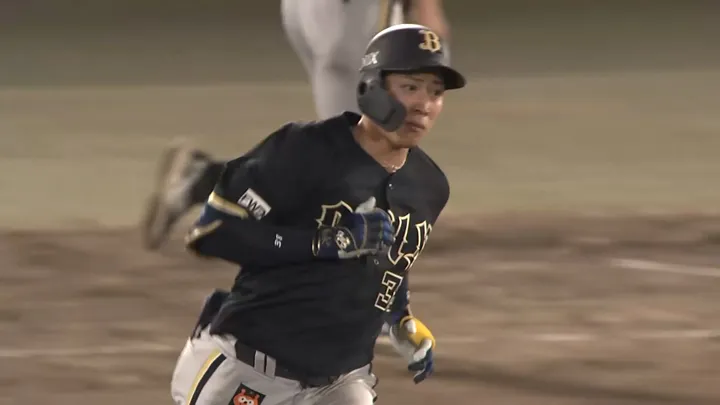
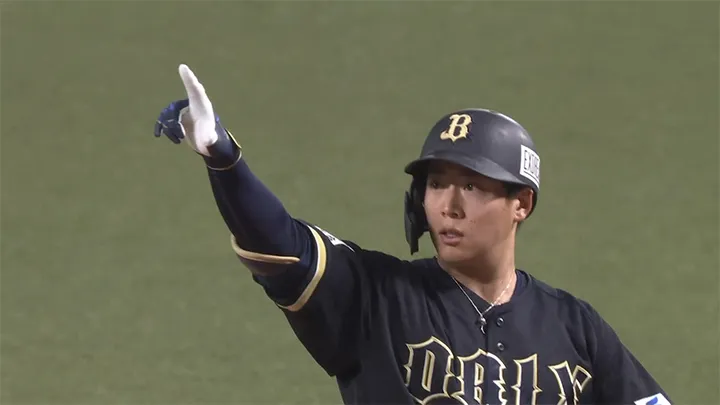
Ryoto Kita joined the Orix Buffaloes as the third-round draft pick in 2020. On July 13, 2021, he made a sensational debut by recording a home run on the first pitch of his first professional at-bat, a first in NPB history for a rookie out of high school.
Although he struggled to produce the desired results in the following seasons, in this, his sixth year as a professional, he delivered results in the second-team regular season games in early spring and was promoted to the first team in mid-April. So far, he has recorded a batting average of .286 and 8 Home Runs, both of which exceed his career highs.
Furthermore, it is noteworthy that his struck out rate has decreased by about 10 percentage points from last season, improving to 17.6%. In this article, we will take a closer look at the characteristics of this young slugger and the background behind his strong performance.
Unexpected data hidden behind academic improvement

When discussing Kita, an unavoidable metric is his chase rate. In both the '24 and '25 seasons, he was more than 10 percentage points above the league average. This trend remains unchanged this season, and his 48.1% is the second highest among Pacific League players with at least 100 plate appearances.
On the other hand, as mentioned earlier, it is also a fact that the rate at which he is struck out has visibly improved. Despite chasing so many pitches outside the zone, why is the frequency with which he is struck out decreasing?
Even if it's in the ball zone, I'll swing and make contact with the bat.

Looking at the results when swinging at pitches in the ball zone with two strike, it was found that the percentage of swinging strikes has decreased significantly compared to last season, while the percentage of fouls has increased accordingly. The fact that he swings and misses at balls less often even when cornered and is now able to hang in there with fouls seems to be the factor that greatly improved his struck out rate.
In this way, a hitter who reaches for balls but keeps his struck out low as a closer is rare. There are 10 players in the Pacific League this season who have stood in the batter's box more than 100 times and have a ball zone swing rate exceeding 40%, and among them, Kita is the player with the lowest struck out rate.
Overwhelming strength within the zone

In addition to an increased contact rate in the ball zone, the pitch in the strike zone is also being captured effectively. A strike zone batting average of .390 ranks a proud first in the league, surpassing the heavy hitter of other teams as a closer. Pitches outside the zone that are difficult to turn into hits are fended off as fouls, while the pitch within the zone is reliably finished off. This skillful batting technique is what supports the excellent performance seen so far.
The keys to awakening power hitting are 'direction and angle'.

This season, Kita has refined his power hitting in addition to his contact ability. In particular, his slugging percentage when pulling the ball has risen from .563 last season to .750 this season. This significantly exceeds the league average of .621, and all 8 Home Runs he has hit so far were driven toward right field.

Looking at the quality of his hits, there has been an increase in contact leading to extra-base hits this season. What I want to focus on here is the "Pull Air Rate," which indicates the percentage of fly balls and line drives hit toward the pull side out of all batted balls.
Generally, batted balls hit at an angle toward the pull side are more likely to become extra-base hits, and this ratio is one of the metrics emphasized even in Major League Baseball for evaluating a hitter's tendencies and power. Ryota Kita's Pull Air Rate has risen by about 10 percentage points since last season, recording 21.7% this season, which exceeds the league average.
By hitting many balls at an angle in directions prone to becoming extra-base hits, his overall slugging percentage has also marked .452, more than 10% higher than last season. While the birth of a new homegrown power hitter is eagerly awaited within the team, he is brilliantly showcasing batting that meets those expectations.
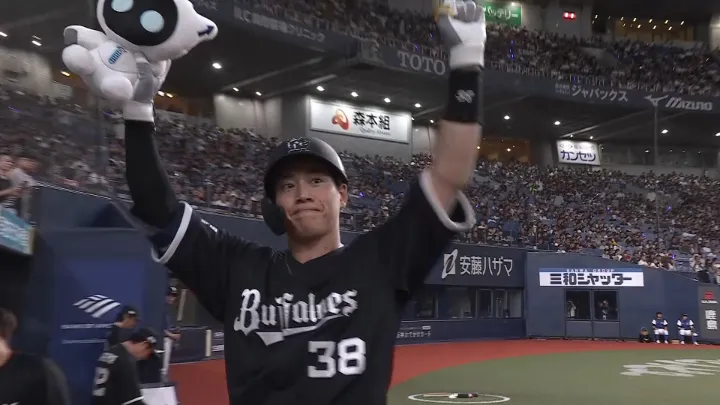
The scene where he hit a dramatic walk-off home run to lead the team to a win in a game held at Tokyo Dome on August 3rd this year must be burned into the eyes of many fans. Following his remarkable performance this season, a personal cheer song for Kita has also been prepared.
It was inherited from former Orix Buffaloes player Yoshio Itoi, who has been an idol of his since childhood. With the same melody as the former "Superman" at his back, the young slugger continues to blast intense line drives.
※All figures in the text and tables are as of the end of September 6, 2026.
Text by Data Stadium
![[Coach Tsuyoshi Nishioka Steps Down] Today's Pacific League [October 11]](https://media.insight.pacificleague.com/webp/bBUU77DWo19WJw2QDDi40AGxH2YkQ3WiKFfb3FPS.webp)
![[Miyazaki PL] Orix Buffaloes' Seiichi Teramoto hit a lead-off home run off Masahiro Tanaka, but the pitcher lineup collapsed and they suffered a lose.](https://media.insight.pacificleague.com/webp/ChxSfUGicpbk57RdXPJqSjM5q54xHFlTwxBvmq3s.webp)
![Ryoya Kurihara won two batting titles: 2026 Pacific League Title Winners [Batting Category]](https://media.insight.pacificleague.com/webp/RXiiCj0UjQrdMefevwrfWduFLVdZlJLIQqiAy0oe.webp)